
People form an opinion about your website in 0.05 seconds. Once that impression is made, it is hard to change it. That is how fragile attention is.
So what happens when brand strategy lives in one place, design in another, and the Webflow build somewhere else? The story gets lost in translation. Not because anyone is bad at their job. Because nobody owns the thread from “who we are” to what someone actually sees when they land.
Design without strategy is guessing
If you are designing without a brand strategy, you are leaving it up to your audience to decide what makes you unique. And they might not get it right, even if you explain it in detail.
Before I work on a design, I need to know the story behind the brand. On Spyne , the premise was clear from the start: your in-house CFO partner for growth and exit readiness. That one line shaped everything. The name hints at the value (Spyne has your back). Frosted glass stands for transparency. A line runs through the site like a spine, guiding the journey. Colors map to values: grounded, proactive, adaptable. None of that comes from a mood board alone. It comes from strategy first, then design that carries it.
When three vendors become one person translating
I see this a lot. A positioning deck from one studio. Figma files from a freelancer. A Webflow build queued with an agency. Everyone is competent. But the organisation becomes the glue holding three timelines together.
The small expensive gaps
Typography that never made it from brand guidelines into the CMS. Messaging that reads differently on the homepage than in the sales deck. Motion that looked right in prototype but feels off in production because the builder never sat in the strategy session.
Paying twice
Re-work gets billed as refinement or development complexity. Often it is just fixing misalignment that one thread of ownership would have caught in week one.
What one engagement actually means
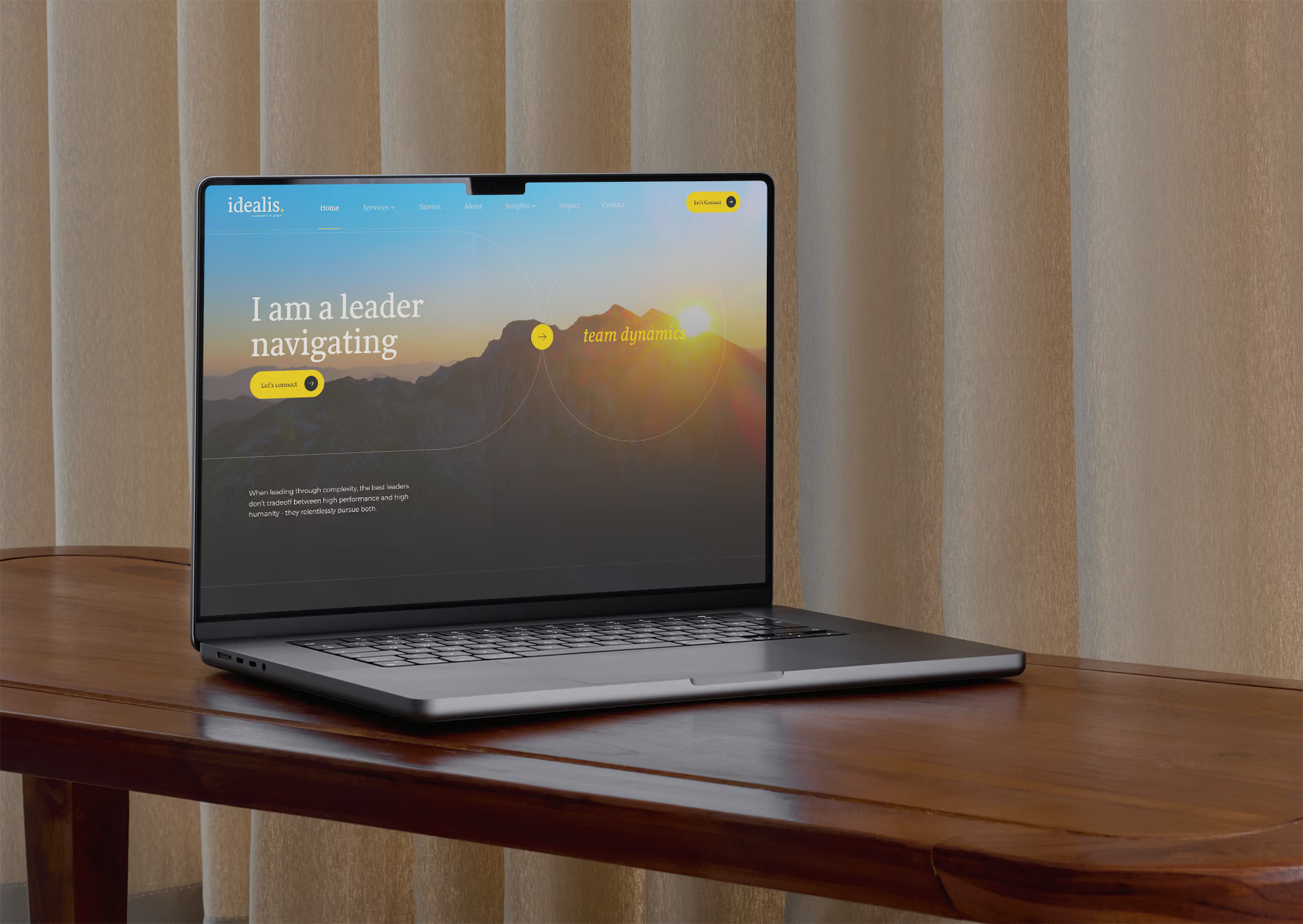
One engagement does not mean rushing everything at once. It means the same strategic memory carries from identity system to navigation debate to CMS scoping to the first interaction in Webflow. That is the pattern on the services page and on projects like Idealis Advisory . Brand before design before build. But the intent survives because one person held the thread.
Sometimes I collaborate with strategists who get it. Max Hoefeijzers on brand direction while I own design and build is a setup that works when the roles are clear and the story stays in one room. The point is not doing everything alone. The point is not losing the story between phases.
- Verbal and visual identity locked before UI exploration begins.
- Design stays in Figma, not inside the builder, but with CMS reality in mind.
- Development inherits decisions instead of re-interpreting them.
- Marketing teams can publish without a dev ticket for every copy change.
When splitting still makes sense
Not every company needs a full brand-to-build run. A locked design system plus Webflow rebuild is a build hire. A logo refresh with no site work is a brand hire. The friction starts when all three are needed and treated as interchangeable suppliers.
So what is your brand saying in that first second? Is it ready to fight? Because if your story is not clear, people will create their own. And it might not match the one you want to tell.